Office tour checklist: 12 questions to ask before choosing
This checklist provides twelve questions for a workspace tour at Southpoint Office Suites in Southpoint, Jacksonville. Start your comparison with private offices advertised from $10 per person per day, excl. tax, then inspect the scope of the actual offer.
Starting rates as published by our workspace operator; billed monthly. Final pricing confirmed on your tour.
Private suites to discuss on a tour
By Salem Hassan, owner · Published · Updated
1. Which exact workspace and building are we discussing?
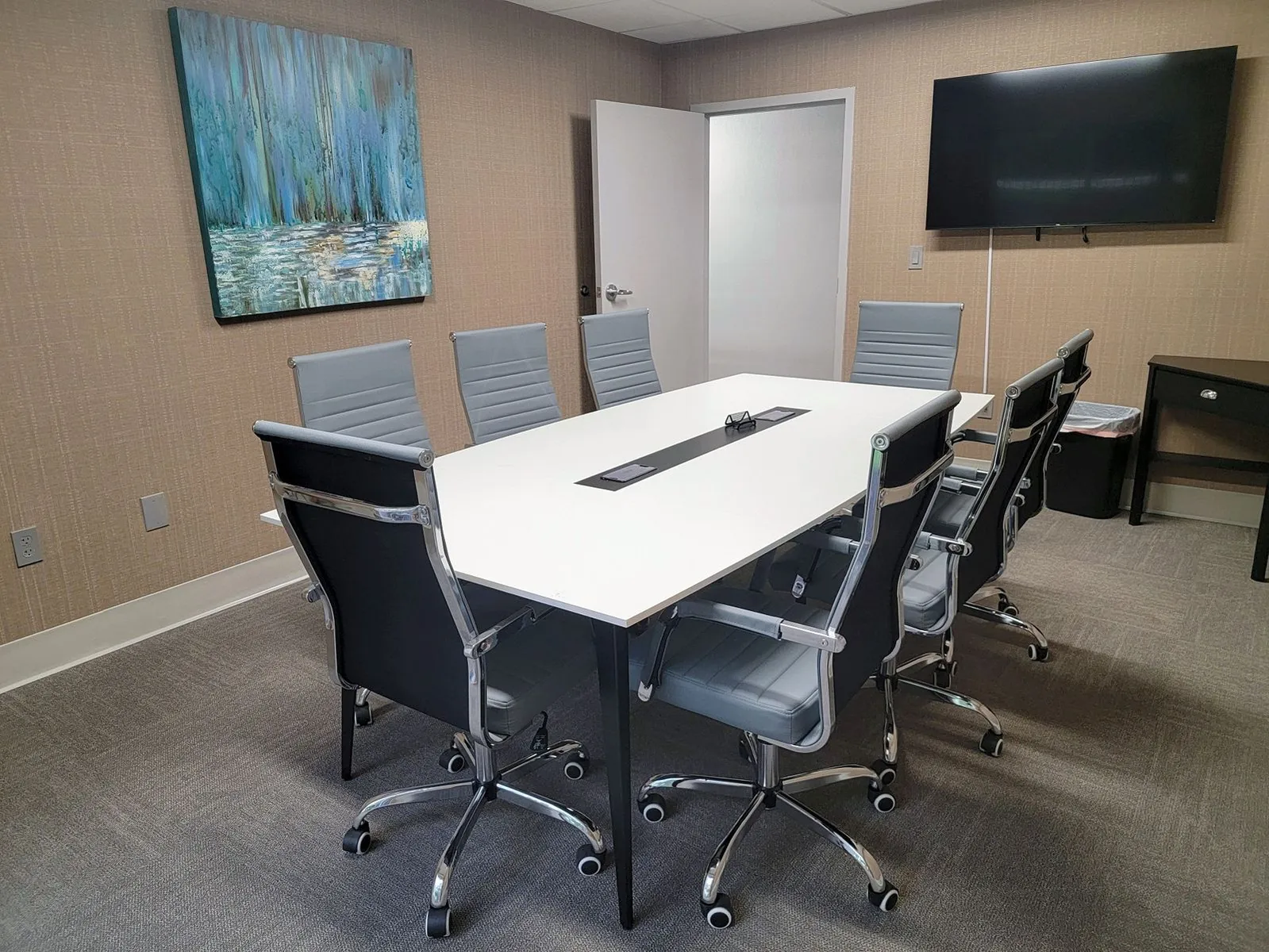
Begin by identifying the room, shared area or service being offered and the building where it applies. Southpoint has two locations, so a general conversation about the business should become a specific discussion about 4110 Southpoint Blvd or 6821 Southpoint Drive North. Ask to see an appropriate interior for the proposed arrangement. A tour of one attractive room is not a reservation of that room, and a property photograph does not establish current availability. Write the proposed workspace and address at the top of your notes before comparing features or prices.
2. How does this space support our normal working day?
Describe attendance, focused tasks, calls, equipment and visitors instead of asking only how many desks fit. Ask the person showing the space to walk through your routine with you. Consider where people sit, how they move and which tasks need another room. A shared arrangement may suit portable independent work, while an enclosed office may suit a consistent team base. Neither choice should depend solely on the company's size or job title. Use an ordinary busy day as the test, including the activities that are awkward in your current setting.
3. What furnishings come with the offered room?
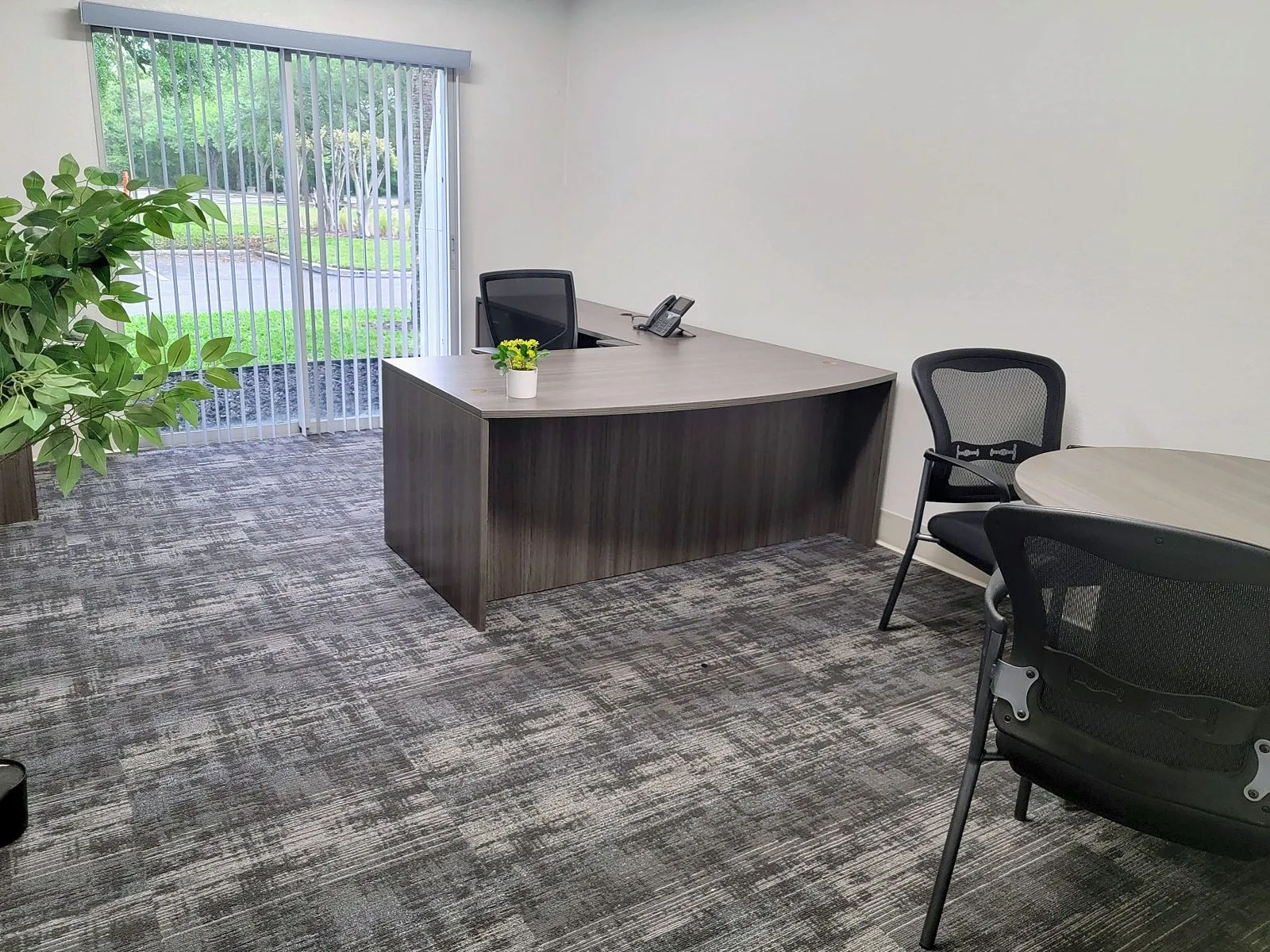
Check the actual furniture rather than treating furnished as a complete inventory. Southpoint's private-office information lists a desk with return, executive chair, two guest chairs, small conference table and file cabinets. Ask how the offered room relates to that description and discuss any equipment or layout needs. Consider work-surface space, visitor seating and whether the arrangement supports the people who will use it. If you want furniture moved or something added, ask before relying on that change. Record what is included in the proposal and what remains a separate request.
4. Which everyday services are included in our plan?
Ask for a written list of inclusions attached to the service under discussion. Private-office information lists utilities, fiber internet, reception, coffee and daily janitorial alongside furnishings. Coworking has its own published list and should not inherit every private-office inclusion. Separate basic services from optional items and usage-based facilities. Explain anything unusual about your work so the team can address it directly. A helpful tour answer identifies who handles each operational task, how you raise a problem and which responsibilities stay with your business. Keep that practical division clear when comparing other offers.
5. Where should our calls and confidential conversations happen?
Explain how often you speak on calls, whether several colleagues talk at once and what privacy your work requires. Assess the offered room or shared setting rather than assuming a door guarantees sound isolation or that headphones solve every concern. Ask about suitable arrangements for longer video meetings and client conversations. If another room would be needed, connect that need to booking and cost questions. Your business remains responsible for assessing its professional obligations. A tour helps you examine physical and procedural conditions, not obtain a generic assurance that every sensitive activity fits.
6. How are meeting rooms reserved and charged?
Describe group sizes, visitor frequency and the kinds of sessions you expect. Southpoint's private-office information lists six monthly meeting-room hours; ask how that allowance works for the actual plan, how bookings are made and how additional use is handled. Do not extend it to coworking, virtual offices or every other service. Look at the appropriate room and discuss the date and format you need. An allowance is useful only when its booking conditions suit your work. Record what is included, what is separately quoted and what still depends on a confirmed reservation.
7. What are the access and visitor-arrival arrangements?
Ask how members use the space and how guests find the correct room or reception point. Reception is staffed Monday through Friday, 8:30am to 5pm Eastern; those are reception hours, not a statement removing existing 24/7 member access. Confirm the arrangements applicable to your selected service and intended visits. Walk through the arrival instructions you would send a first-time guest. Ask about parking for members and visitors instead of assuming a specific allocation. Clear directions and an understood arrival process matter more than a broad claim that the building is convenient.
8. How will connectivity and our equipment needs be handled?
Published fiber internet is a starting point for a practical discussion, not a guarantee about every device or technical configuration. Describe the equipment you use, recurring video calls and any special network needs. Ask how to confirm that the proposed arrangement supports them and who to contact with a problem. Consider power, work-surface placement and equipment that needs to remain in the room. For shared access, ask what may be left behind. Avoid assuming storage or installation permissions merely because a plan includes a seat or an office photograph shows spare space.
9. What address and mail arrangements apply to this service?
If business correspondence is part of your decision, explain the types of mail, who will collect it and where you intend to use the address. Southpoint's virtual-office plan describes a business address and mail handling. Ask about the actual process without assuming forwarding, scanning or other unconfirmed services. Keep a mailing arrangement distinct from a daily workspace and from registered-agent responsibilities. Organizations using an address can set their own acceptance requirements. Record the exact proposed address format and identify any outside checks needed before updating accounts or public business details.
10. What is the complete quotation for our intended use?
Request a written quotation matching headcount, attendance, service and selected extras. Keep advertised starting-rate units intact rather than multiplying a daily rate by guessed days to produce monthly rent. Ask for the actual monthly amount, taxes, billing dates and any usage-based or optional charges. Dedicated desks are Call for pricing, so they require a real quotation rather than a borrowed rate. Compare offers on the same scope. A lower headline figure is not a complete answer if your ordinary calls, meetings or equipment needs require services missing from that offer.
11. What terms govern starting, changing and ending the arrangement?
Review the initial commitment, renewal, notice, cancellation and plan-change process for the specific agreement. Do not infer a universal short term from flexible or a particular deposit from executive suite. If payments, guarantees or setup charges apply, ask how they work in the proposal. Discuss possible headcount changes, but distinguish a process for requesting different space from guaranteed future room availability. Take the documents away for appropriate review when needed. The useful outcome is understanding what you are agreeing to now, not collecting optimistic statements about what might become possible later.
12. What must happen before we can begin using the service?
End the tour with a practical sequence: confirm the suitable workspace, obtain the written quotation, complete any required checks, agree terms and arrange access or activation. Ask who is responsible for each remaining item and what must be confirmed before your intended start. Do not assume that seeing a furnished room means immediate move-in. Record unresolved questions alongside the next contact and proposed follow-up. This keeps the decision actionable without creating an artificial deadline. Before leaving, confirm the correct building for any return visit and the information your team should supply next.
Use your notes to make the decision
After the tour, separate confirmed details from requests awaiting an answer. Compare your essential requirements first, then the preferences that would be nice to have. Share the notes with anyone who will use or approve the workspace so they can spot practical omissions. If an important requirement remains unclear, ask a specific follow-up before agreeing the service. A useful checklist is not a score for how impressive a building appears; it is a record of whether the proposed arrangement supports your work and which decisions are still outstanding.
Keep the same twelve questions when comparing another space, but let the answers remain different. Do not force a traditional lease, shared desk and furnished private office into identical assumptions about services or responsibilities. Return to the relevant service information for the option you are actually considering and request a complete quotation. The strongest next step is a clear brief and an understood agreement, whether you choose Southpoint, continue comparing, or adjust your workspace requirements after seeing what the working day would involve.
Plan your Southpoint visit
- Private suites to discuss on a tour
- 4110 Southpoint Blvd
- 6821 Southpoint Drive North
- Book a tour
- All workspace buying guides
Related buying guides
Frequently asked questions
What should I bring to an office tour?
Bring headcount, attendance, call patterns, visitor needs, equipment details, intended start and essential requirements. Use the twelve questions to organize answers and mark unresolved items.
Does seeing a furnished room confirm immediate move-in?
No. Confirm the suitable room, written quotation, required checks, agreement and access arrangements. A viewing does not itself reserve the room or complete the start procedure.
How should I record tour answers?
Separate confirmed inclusions from optional requests and unanswered questions. Note the building and service, keep the quotation with the notes and assign a follow-up for anything essential.
Can the checklist compare coworking and private offices?
Yes. Use the same questions but keep the answers specific to each plan. Do not transfer furnishings, room allowances, storage arrangements or terms from one service to another.