Virtual office vs virtual mailbox: choosing an address service
This guide compares a virtual office with a virtual mailbox for businesses considering Southpoint, Jacksonville. Southpoint Office Suites offers its virtual-office business address and mail-handling plan starting from $3 per day, excl. tax.
Starting rates as published by our workspace operator; billed monthly. Final pricing confirmed on your tour.
Virtual office address and mail plan
By Salem Hassan, owner · Published · Updated
Decide whether you need a mailbox or a workplace connection
A virtual office and a virtual mailbox can both appear in a search for a business address, but they describe different kinds of buying decisions. A virtual office usually connects an address arrangement with a workplace provider and the possibility of separately arranged business facilities. A virtual mailbox usually emphasizes managing correspondence away from the place where the customer works. These are category descriptions rather than standardized service specifications. The agreement, not the label, determines what the customer receives and how the arrangement can be used.
Start by writing down the task you cannot currently do well. Perhaps business letters arrive at home and become mixed with personal mail. Perhaps clients need a professional contact address, or your remote team occasionally needs somewhere to meet. Those problems are related but not identical. If the only task is collecting correspondence, focus on the handling process. If your business also needs physical meetings or occasional workspace, include those activities in the brief instead of assuming that a mailbox plan covers them.
Understand the address component before comparing features
Ask for the exact address format and the permitted uses under the proposed agreement. A street-style address does not automatically establish that an organization will accept it for its own verification or registration purposes. Banks, licensing bodies, filing authorities and platforms can apply different requirements. Describe the actual arrangement when asking those organizations for guidance. Avoid relying on a broad claim that one type of service is universally accepted while another is not; the particular use needs its own answer.
It also helps to distinguish a public contact address from a place where the business performs its work. A company may receive correspondence at one location while its staff work elsewhere. That arrangement should be described accurately wherever an organization asks about operating premises. Do not use a service name as a substitute for understanding the form. Record which address belongs in each account or document so the business is consistent without pretending that all address purposes are interchangeable.
Ask how mail handling works in practice
Mail handling is a process involving people, instructions and timing. Ask what happens when correspondence arrives, how the business identifies itself, who is authorized to collect it and how collection is arranged. Discuss the kinds of correspondence you expect and any items that create special operational concerns. The useful question is not whether a website uses the phrase mail service, but whether the actual process works for your business and the people responsible for keeping its correspondence organized.
Some services marketed as virtual mailboxes describe digital or onward-delivery features. Those features vary and should never be transferred by assumption to another provider. Do not infer scanning, opening, forwarding or package handling from the word virtual. Southpoint's published virtual-office plan describes an address and mail handling; discuss any specific additional requirement directly. If a particular process is essential, make it a decision requirement and get the scope clarified before setting up the service or notifying important senders.
Compare occasional workplace access separately
The workplace connection may be the practical reason to consider a virtual office instead of a correspondence-only arrangement. A remote business may occasionally need a meeting room, a place for an interview or a private day office. Southpoint has meeting and day-office options to discuss. Their presence does not mean every address plan includes room time, nor does it establish that your preferred room will be available on a particular date. Ask about the booking process and suitable options for the intended visit.
Describe the meeting rather than merely asking whether a room exists. Explain group size, visitors, expected duration, presentation needs and whether the conversation needs an enclosed setting. Ask for the full arrangements and quotation for that use. A plan with an attractive address rate can still be the wrong choice if the working facilities you depend on cannot be arranged appropriately. Equally, a business with no workplace needs should not buy additional services simply because they are described alongside a mailbox.
Work out who will manage the service
A remote arrangement still needs someone in your company to take responsibility. Decide who maintains the authorized-contact list, checks expected correspondence, arranges collection and updates the service when personnel change. An owner who travels frequently may need a different internal process from a local team whose administrator can collect mail during an agreed visit. Explain that pattern when discussing the plan. The provider can describe its process, but it cannot replace decisions your own business needs to make.
Document a simple routine for important correspondence. Include how staff tell the responsible person that a letter is expected, how receipt is recorded and who follows up if it has not arrived. Keep confidential information within your own appropriate controls. Do not treat a general service description as proof that every professional or regulatory obligation has been met. Where your work has particular handling requirements, assess them specifically and obtain appropriate advice rather than inferring suitability from the professionalism of the reception area.
Read the full quotation and service agreement
Keep the units attached to advertised starting rates. Southpoint presents its virtual-office starting rate per day with monthly billing disclosed in the rate note. That is not permission to calculate a monthly total using an assumed number of days. Ask for the actual monthly amount for your chosen service, taxes, selected extras and any usage-based charges. Compare quotations for the same requirements rather than comparing a bare address line with another provider's broader collection of optional services.
Review the start procedure, initial commitment, renewal, notice and cancellation arrangements. Ask what happens to correspondence and address use when the agreement ends or changes. Do not assign a universal notice period to virtual offices or virtual mailboxes; those are contract details. If your business changes location frequently, address continuity may be an important consideration, but it still depends on the agreement. Request clear instructions for leaving or updating the plan before you rely on the address across important accounts.
Plan activation and address changes in the right order
Confirm the service and any required onboarding before sending your new address to customers or institutions. Obtain the approved address format and circulate it internally. Make a list of where the current mailing details appear, including invoices, supplier accounts, contact pages and recurring subscriptions. Prioritize time-sensitive correspondence and records that require verification. A coordinated change is more reliable than updating visible marketing first and discovering later that an essential organization needs additional information about the arrangement.
If you are switching from another provider, ask both parties about their respective processes. Do not assume the new service can retrieve items sent to the previous address or that the old service continues indefinitely. Keep a dated record of updates and follow up with important senders. During the transition, compare expected correspondence with what actually arrives. This is ordinary business administration rather than a reason to avoid an address service; the point is to give the arrangement an owner and a clear sequence.
Choose the narrower service that meets the whole brief
An address-and-mail plan can be appropriate for a business that works remotely and wants a Southpoint contact arrangement. A correspondence-focused service may be appropriate when the business does not need a relationship with a physical workspace provider. An ongoing private office may be more suitable when the team actually needs a daily base. These are different purchases. Choose the confirmed scope that meets your tasks rather than treating the most comprehensive-sounding label as automatically better.
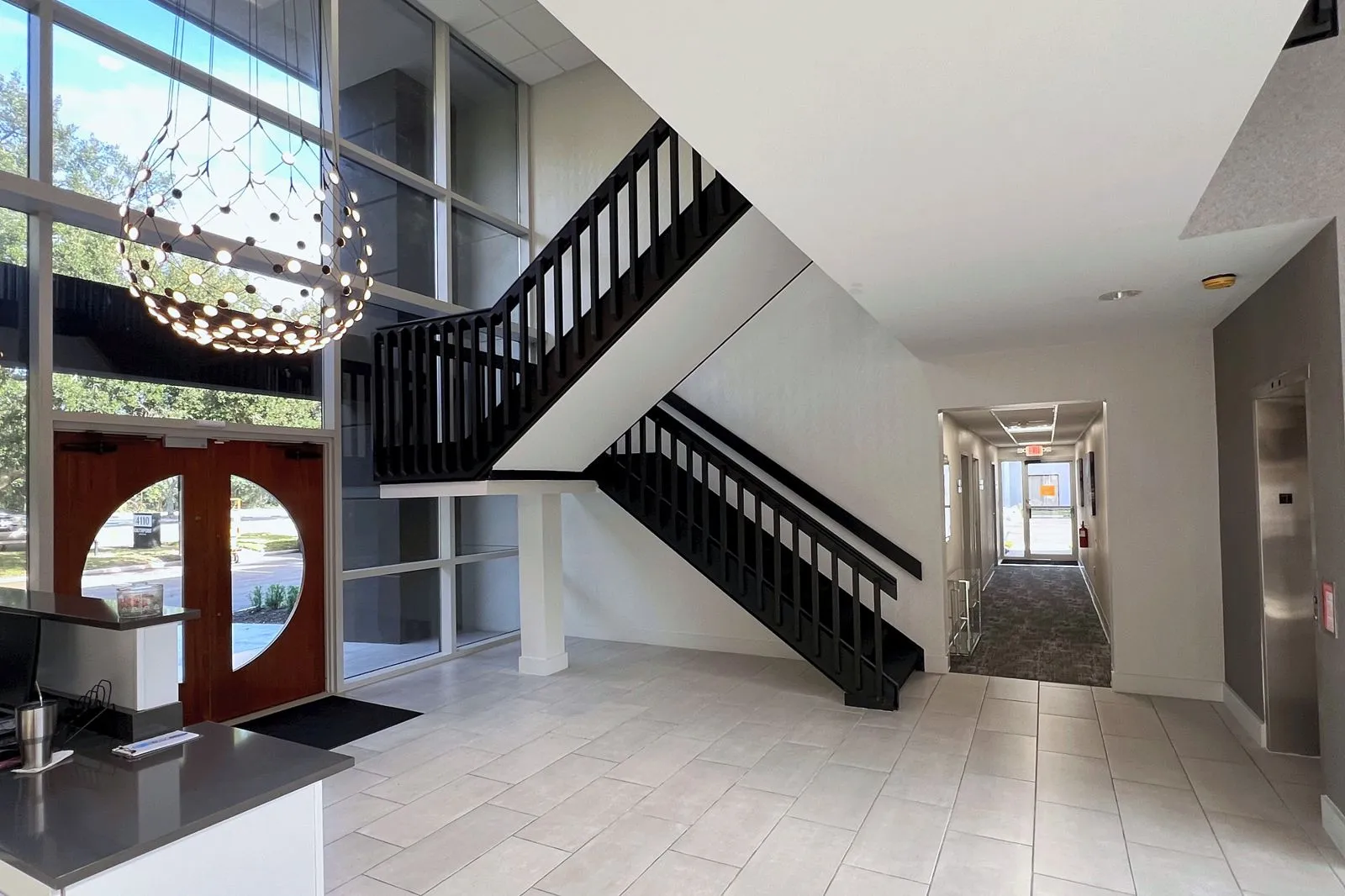
For a Southpoint discussion, bring your address uses, expected mail, collection pattern and occasional meeting needs. Explore the virtual-office service page for the current offer, then ask about arrangements at 4110 Southpoint Blvd and 6821 Southpoint Drive North. Confirm the specific building and agreement rather than assuming identical services everywhere. A tour gives you a chance to see the interior and understand the workflow. The strongest decision is one you can explain in plain language: what the service does, who handles each step and what remains separate.


Plan your Southpoint visit
- Virtual office address and mail plan
- 4110 Southpoint Blvd
- 6821 Southpoint Drive North
- Book a tour
- All workspace buying guides
Related buying guides
Frequently asked questions
What is the practical difference between these services?
A virtual office generally connects an address service with a workplace provider; a virtual mailbox generally emphasizes correspondence management. Neither label is a standardized specification, so compare the actual agreement and processes.
Does Southpoint promise mail scanning or forwarding?
The published virtual-office plan describes a business address and mail handling. Do not infer scanning, forwarding or other processes; discuss your specific handling requirements before choosing the service.
Does an address plan include a permanent desk?
Do not treat an address-and-mail plan as a permanent desk or an unrestricted meeting allowance. Discuss coworking, private offices, meeting rooms and day offices separately according to your working needs.
How should I compare the quotations?
Use the same address uses, correspondence pattern and workplace needs for each quotation. Request the actual amount payable, selected services, taxes, usage charges and the conditions for starting or ending the agreement.