Practical workspace comparisons
Coworking vs private office in Jacksonville
This guide compares coworking with a private office for people planning work in Southpoint, Jacksonville, Florida. Southpoint Office Suites publishes coworking access from $9 per person per day, excl. tax, day passes from $39 per day, excl. tax, and private offices from $10 per person per day, excl. tax; dedicated desks are Call for pricing.
Starting rates as published by our workspace operator; billed monthly. Final pricing confirmed on your tour.
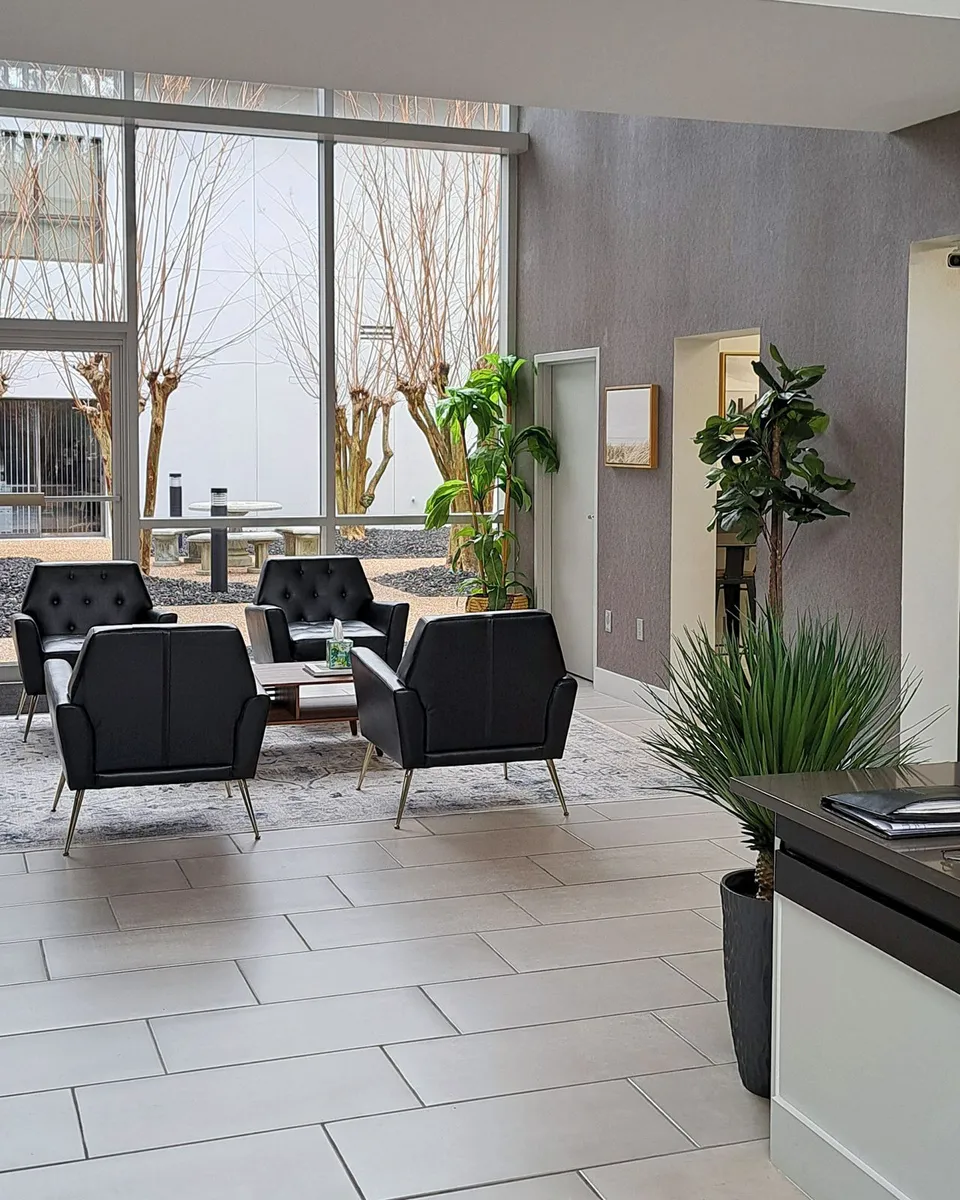
Compare the practical differences
| Dimension | Coworking | Private office |
|---|---|---|
| Cost structure | Access from $9 per person per day, excl. tax; day pass from $39 per day, excl. tax; dedicated desk: Call for pricing | Southpoint private offices from $10 per person per day, excl. tax; request a complete quote |
| Commitment | Confirm the access plan or day-pass conditions | Confirm agreement, notice and room-change conditions |
| Setup time | Confirm onboarding and a suitable place for your intended visit | Confirm the selected room and access arrangements |
| What is included | Southpoint lists fiber internet, coffee, staffed reception and daily janitorial; meeting rooms are on site | Southpoint lists furnishings, utilities, fiber internet, reception, daily janitorial and six monthly meeting-room hours |
| Best-fit uses | Independent work that suits a shared setting | Work needing an enclosed room or a consistent team base |
Choose around your working day, not your job title
Coworking and a private office answer different questions about how you use space. Shared workspace may suit someone whose tasks travel easily with a laptop and who is comfortable around other workers. A private room may suit someone who needs a consistent place for a team, equipment or confidential conversations. Neither format belongs exclusively to freelancers, startups or established businesses; the work itself is the better guide.
Describe a normal day hour by hour. Note periods of concentrated writing, scheduled calls, informal conversations and visitor meetings. Then ask which activities can happen in a shared setting without disturbing others or exposing information. If most of the day is quiet independent work, shared access may be appropriate. If much of the day involves sensitive discussion, the case for a private office becomes more practical than cosmetic.
Understand the different access choices
Southpoint's coworking information describes access plans, day passes and dedicated desks. Those labels should lead to questions about attendance, seating, access arrangements and what you may leave behind. A dedicated desk is Call for pricing; do not assign it a made-up daily or monthly amount. Ask what the particular plan allows and how to arrange the visits you expect to make.
A private office is an enclosed workspace rather than simply a different seat in a shared area. That distinction may matter for leaving equipment in place, working with colleagues or receiving visitors, but the agreement still defines the actual arrangements. Confirm the room, headcount, access and storage requirements. Do not assume every available office fits every team or that a preferred room can be reserved without confirmation.
Compare prices using the published units
The coworking access starting rate is expressed per person per day, while the day-pass rate is expressed per day. Private-office starting rates are also expressed per person per day. Keep these units visible when you compare the options. The published rate note explains monthly billing; it is not a formula for calculating a monthly total by multiplying a rate by an assumed attendance count.
Ask for a quotation reflecting your actual pattern: who will attend, what access is needed, whether visitors are expected and which meeting facilities may be used. Include taxes and any selected extras in the discussion. A lower advertised starting rate does not automatically make the final plan better value, particularly if a missing service or unsuitable working environment creates problems for the tasks you need to complete.
Separate included amenities from bookable facilities
Southpoint's coworking copy lists fiber internet, coffee, staffed reception and daily janitorial, with meeting rooms on site. Meeting rooms being on site does not establish a free allowance for every coworking arrangement. Ask how to book a room, what it costs for your plan and whether the room and date you need can be confirmed. This distinction is important if you expect frequent calls or client meetings away from the shared area.
Private-office information lists furniture, utilities, fiber internet, reception, daily janitorial, coffee and six monthly meeting-room hours. Ask how those hours are booked and what happens if you need more. Do not extend an allowance from one service to another or assume every meeting format is covered. The most useful comparison is a list of your recurring needs next to the specific inclusions in the proposed plan.
Assess privacy without assuming silence
A shared workspace naturally involves other people using the same environment. Ask about call practices, visitor arrangements and the expectations placed on everyone using the area. Consider whether headphones address your concentration needs or whether your work needs a separate room. If your profession has confidentiality requirements, apply your own standards rather than treating a general coworking description as proof of suitability.
An enclosed office offers a different boundary, but it is not a universal promise of sound isolation or regulatory compliance. On a tour, consider your calls, documents, screens and visitor movement. Ask relevant questions about the offered room and your intended use. Privacy is a combination of the space, the agreement and your working practices; it should not be inferred solely from the presence of a door.
Think about continuity, changes and commitment
Occasional attendance and daily attendance can produce different priorities. Someone moving between client sites may value a place to work when needed. A team collaborating throughout the week may value a consistent room where work can remain organized. Ask about the arrangements for changing plans if your pattern changes, but do not read possible options as guaranteed future availability.
Review the initial commitment, notice, cancellation, renewal and any access restrictions for the actual offer. A day-pass label should not be stretched into a promise about all membership conditions, and a private-office label should not be stretched into an assumed lease term. Ask what happens if you need fewer visits, more people, a different room or a different building.
Use a viewing to test the practical fit
Bring examples of the activities you expect to do. Ask where a video call would happen, how a client is greeted, where a meeting can be held and what equipment can remain in place. Consider the arrangement on a busy working day rather than imagining only an empty room. A real interior photograph helps establish the setting, but the offered service and current suitability still need confirmation.
Review the coworking, private-suite and meeting-room pages together, then ask about options at 4110 Southpoint Blvd and 6821 Southpoint Drive North. Confirm which building supports the specific arrangement you need. The right answer may be shared access, a private room or a different approach entirely. Choose based on confirmed working conditions and the complete quotation rather than assuming that more private space is always necessary.
Frequently asked questions
What are the published coworking and private-office starting rates?
Coworking access starts from $9 per person per day, excl. tax; day passes start from $39 per day, excl. tax; private offices start from $10 per person per day, excl. tax. Dedicated desks: Call for pricing. Starting rates as published by our workspace operator; billed monthly. Final pricing confirmed on your tour.
Are meeting rooms included with coworking?
Southpoint lists meeting rooms on site for coworking. That is not a statement of a free booking allowance. Ask for your plan's booking arrangements and charges; private-office copy separately lists six monthly meeting-room hours.
Should I choose a private office for confidential calls?
An enclosed room may be more appropriate than shared seating, but assess the specific room and your confidentiality obligations. Do not assume sound isolation or compliance without checking your requirements.
Can I leave equipment in shared workspace?
Confirm the storage, seating and access rules for the specific plan. Access plans, day passes and dedicated desks should not be assumed to have identical arrangements.
Can I change from coworking to a private office later?
Ask about plan-change conditions and current suitable rooms. A possible future change is not a guarantee of room availability, pricing or the same agreement terms.