Practical workspace comparisons
Executive suite vs traditional lease in Jacksonville
This guide compares an executive suite with a traditional office lease for businesses considering Southpoint, Jacksonville, Florida. At Southpoint Office Suites, private offices start from $10 per person per day, excl. tax; compare that published starting rate with a complete written lease quotation, not rent alone.
Starting rates as published by our workspace operator; billed monthly. Final pricing confirmed on your tour.
Compare the practical differences
| Dimension | Executive suite | Traditional lease |
|---|---|---|
| Cost structure | Southpoint private offices: from $10 per person per day, excl. tax; request the monthly quote | Request rent and the full allocation of operating costs |
| Commitment | Confirm the specific workspace agreement and notice | Review the lease term, renewal and exit conditions |
| Setup time | Confirm the chosen room is ready and onboarding is complete | Confirm condition, any preparation and service activation |
| What is included | Southpoint lists furnishings, utilities, fiber internet, reception, daily janitorial and six monthly meeting-room hours | Depends on the premises and negotiated lease; itemize responsibilities |
| Best-fit uses | Teams wanting a furnished workplace with defined operational services | Businesses prioritizing premises control and able to manage operations |
Two ways to take responsibility for an office
An executive suite is generally discussed as workspace accompanied by a defined package of services. A traditional lease is generally discussed as an agreement for premises, with the division of operational responsibilities set out in the lease. These are category descriptions, not promises about every operator or landlord. The practical distinction is how much of the office your business needs to arrange and manage itself.
Start by asking who will make the office work each day. Someone must arrange furniture, connectivity, cleaning, visitor arrival and the handling of problems. Your business may have the people and systems to do this well, or it may prefer an arrangement where some of those tasks are covered. Neither approach demonstrates greater professionalism by itself. What matters is whether the arrangement supports your work reliably and gives you appropriate control.
Compare the whole invoice and the work behind it
Request a quotation for the same headcount and intended use in both settings. With a traditional lease, ask which utilities, maintenance obligations, cleaning arrangements, connectivity and other premises costs are included in rent and which are separate. The answer depends on the specific lease. Do not attach a standard surcharge or assumed deposit to the category; ask for the actual figures and conditions.
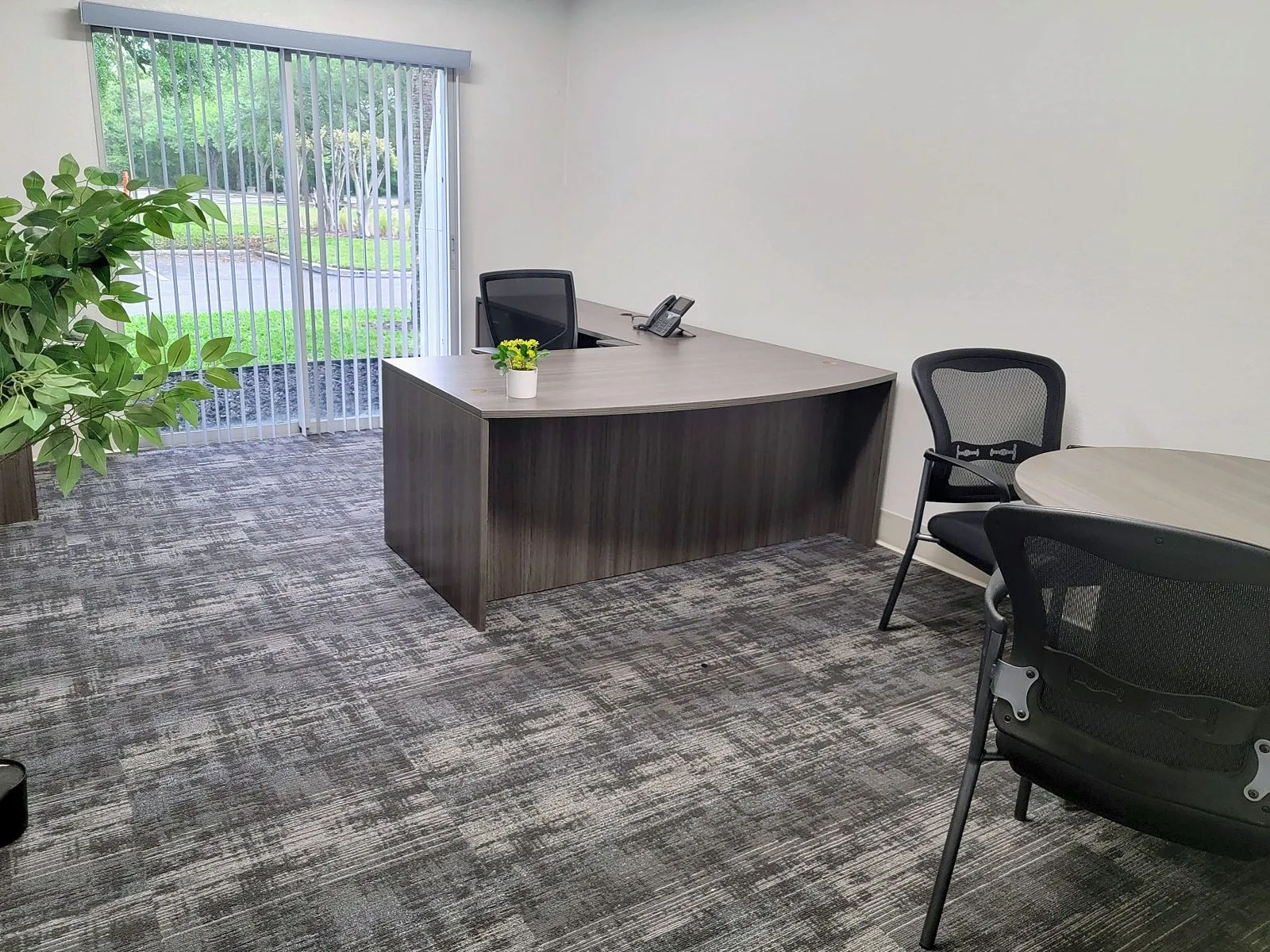
For an executive suite, request the plan's written inclusions and the charges for services outside them. At Southpoint Office Suites, published private-office information includes a desk with return, executive chair, guest chairs, a small conference table and file cabinets. Utilities, daily janitorial, fiber internet, reception, coffee and six monthly meeting-room hours are also listed. Confirm the room offered, booking conditions and any additional use rather than treating that list as unlimited access to every service.
Time spent coordinating an office is worth discussing, but it is not an automatic cash saving. If your team already manages premises effectively, retaining that responsibility may be sensible. If coordination interrupts work you need to prioritize, a defined service package may be useful. Compare the operational workload alongside the financial quotation without claiming that either arrangement will always cost less.
Commitment depends on the document you sign
Do not infer the length of a commitment from the words suite, serviced or traditional. Ask for the initial term, notice requirements, renewal mechanism, payment schedule and the procedure for leaving or changing space. If there are deposits, guarantees, setup charges or restoration obligations, ask how they apply to your proposed agreement. This guide does not promise a minimum term or a particular deposit for either category.
A growing company should ask what happens if headcount changes, but an answer about possible options is not a reservation of future rooms. A business seeking stability should look at continuity as well as exit rights. Write down what needs to remain predictable during your planning period and have the actual agreement checked by an appropriate adviser when the obligations warrant it.
Setup is a checklist, not a universal deadline
A furnished office may reduce the number of items you need to source, but it still requires confirmation of a suitable room, agreed terms and completed onboarding. Ask what is ready, what remains to be arranged, and whether your intended working pattern is supported. Test essential equipment and explain any special connectivity needs. Existing internet service is not a promise that every technical configuration will work without discussion.
For leased premises, ask about current condition, furniture, service connections, permissions for alterations and the handover process. Some premises may already suit your requirements; others may need preparation. Get a sequence of responsibilities and target dates for the specific space rather than accepting an unverified category-wide setup estimate. Your planned start date should remain conditional on the items still outstanding.
Control can be a reason to choose a lease
A traditional lease may be appropriate when the business wants greater say over layout, equipment, operating routines or the character of its premises. Those preferences still need to be checked against permitted uses, building rules and approval requirements. Greater control can come with more decisions and ongoing responsibilities. For a team that values that control and can manage the work, it can be a reasonable trade-off.
An executive suite may be appropriate when a furnished room and defined office services meet the brief without a custom premises project. The trade-off is that the operator's arrangements and the selected plan shape how the space can be used. Ask about furniture changes, visitors, noise, storage, deliveries and access. Do not assume a private room means unrestricted use of the wider building.
Match privacy and meeting needs to actual rooms
Consider the conversations your team holds and the documents or equipment it leaves in the office. An enclosed room provides a different working boundary from shared seating, but suitability for sensitive work still needs your assessment. Ask about doors, visitor movement, call practices and your own security requirements. A room photograph cannot establish acoustic privacy or compliance with professional obligations.
Southpoint's private-office copy includes six monthly meeting-room hours. Ask how booking works, which room suits the group, what happens when the allowance is used and how additional requirements are handled. Do not extend the private-office allowance to other plans or assume a preferred room will be free at a particular time. Meetings should be part of the brief, not an afterthought once the workspace agreement is signed.
Make the final choice with a written brief
Prepare one page describing headcount, attendance, visitor patterns, equipment, privacy needs and the intended start. Mark requirements as essential or optional. Use it when discussing both an executive suite and a traditional lease so that the quotations address the same problem. If one option excludes a task you need, ask who will handle it and at what cost before comparing totals.
For Southpoint Office Suites, explore the private-suite and team-office information and ask about arrangements at both Jacksonville buildings. A tour is a way to inspect an appropriate interior and clarify the proposed service, not a guarantee that all room types are available everywhere. Choose the arrangement whose confirmed scope fits your business, even if that means continuing with a traditional premises search.
Frequently asked questions
What is Southpoint's private-office starting rate?
Private offices start from $10 per person per day, excl. tax. Starting rates as published by our workspace operator; billed monthly. Final pricing confirmed on your tour.
What does Southpoint list as included with private offices?
Published inclusions are furnishings, utilities, fiber internet, reception, coffee, daily janitorial and six monthly meeting-room hours. Confirm the offered room, booking arrangements and any additional services in your quotation.
Is an executive suite always cheaper than a lease?
No. Compare complete written quotations for the same requirements. A lease's operating responsibilities and a workspace plan's inclusions vary, so rent alone is not a complete comparison.
Can I assume a short commitment or immediate move-in?
No. Confirm the specific term, notice requirements, suitable room, readiness and onboarding steps. Neither category establishes a guaranteed minimum commitment or setup deadline.
When might a traditional lease be appropriate?
A business that prioritizes greater premises control and can manage the operating responsibilities may prefer a traditional lease. Review the actual permitted uses, costs and obligations before deciding.